How to Find Out Who a No Caller ID Is (What Works in 2026)
Your phone never receives a hidden caller's number, so no setting can reveal it. These are the methods that do work, including unmasking apps, call trace and the police, and what each one costs.
On this page (7 sections)
You usually can't find out who a No Caller ID is from your phone alone. The caller's network sends the call with a privacy flag, so your phone never receives the number. The network still holds it, though, and there are a few ways to reach that information: paid unmasking services in the US, call trace on landlines, and your carrier working with the police if the calls are harassment. Each method is described below, along with what it can't do.
Why your phone can't show the number
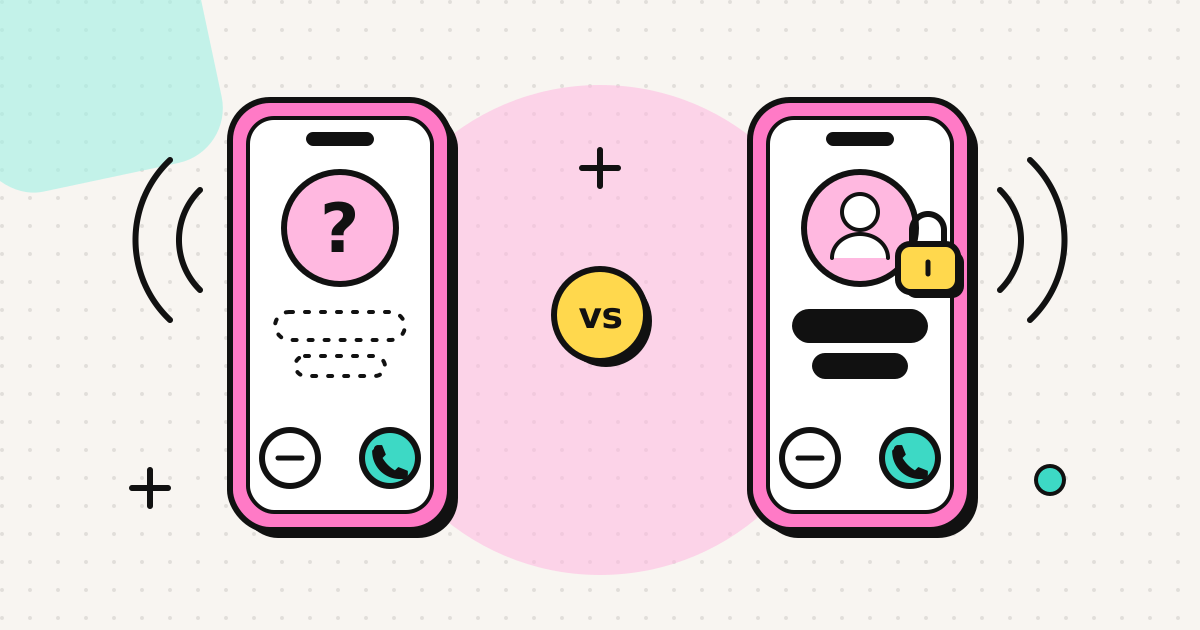
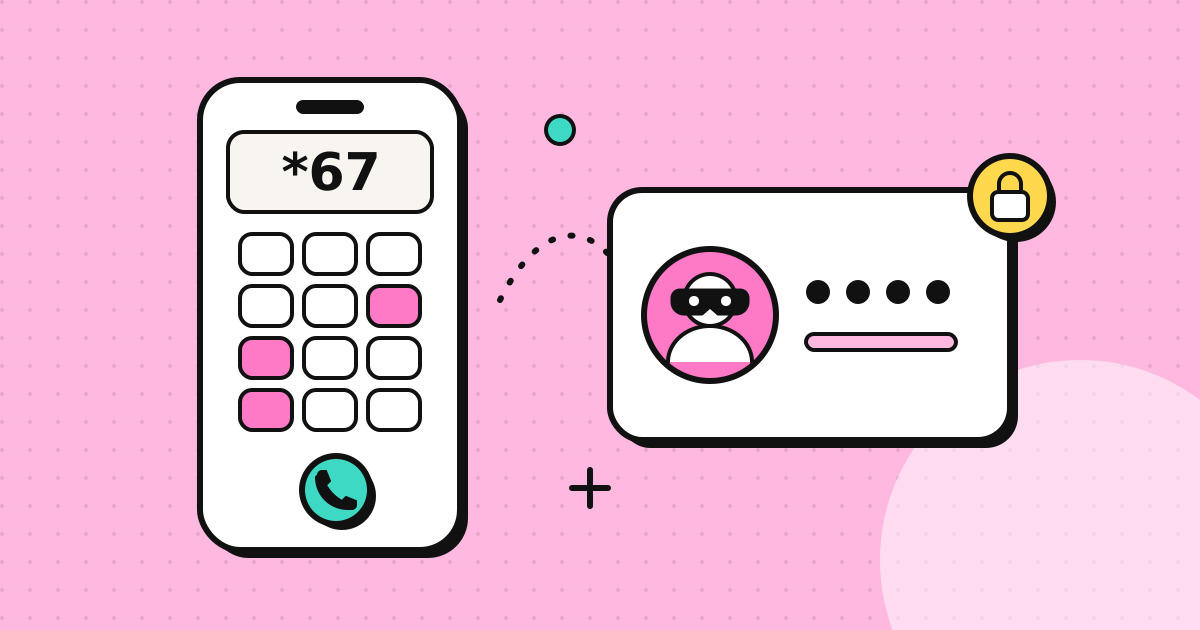
When someone dials *67 (US), 141 (UK) or #31# (much of Europe), or turns off "Show My Caller ID", their carrier still sends the number across the network. It's marked as "presentation restricted". Your carrier respects the flag and delivers the call with the number withheld. What your phone gets is a call with no number attached, so there's nothing in the call log to recover. Our Unknown Caller vs No Caller ID explainer covers the difference between a withheld number and one that went missing on the way.
Methods that do work
1. Unmasking services (US only)
TrapCall is the best-known one, and it's still maintained in 2026. It uses conditional call forwarding. You decline the hidden call, your carrier forwards it to TrapCall's number, and TrapCall reads the caller's number from billing data that the privacy flag doesn't hide. The call then rings back to you with the number showing.
The limits:
- It's a paid subscription.
- It only works with US carriers and US numbers.
- It may not unmask every call. Calls from abroad and some VoIP calls may arrive with no number for TrapCall to read.
- You have to decline the call for it to work, which takes some getting used to.
2. Call Trace on landlines (*57)
Many US landline providers offer Call Trace. Dial *57 immediately after the unwanted call. The provider records the number, but it gives the result to law enforcement, not to you. There's usually a per-use charge. Use it to build evidence for a harassment report.
3. Your carrier and the police
If hidden calls are threatening or persistent, report them to the police. Carriers keep records of the real originating number and can release them under legal process. Before you report, gather:
- the date and time of every call (screenshots of your call log help)
- any voicemails
- anything said that identifies the caller
In the UK, your provider's nuisance calls team can also help, and Ofcom publishes guidance on dealing with nuisance calls. In the US, you can report unwanted calls to the FCC.
4. The voicemail
The simplest method still works well. Let the call go to voicemail. Genuine callers like clinics, delivery firms and recruiters almost always leave a name and a callback number. Scammers and pranksters rarely do.
Methods that don't work
*69or1471. Call-return services can't return a call whose number was withheld. You'll hear "the caller withheld their number" or similar.- "Reveal blocked number" apps that don't use forwarding. Without forwarding the call to a server, there's no way to get the number. These apps are mostly adware.
- Reverse lookup sites. They need a number to look up, and you don't have one.
Right after a suspicious hidden call
- Don't call back a number the caller gave you if they said they were your bank, the tax office or a delivery company. Hang up and call the number printed on your card or on the official website.
- Never read out a one-time code. Real banks don't ask for the codes they text you.
- Write down what was said, with the time, while you still remember it.
- If you shared card details, call your bank's fraud line straight away using the number on the back of the card.
Who is probably calling
Hidden numbers are less mysterious than they seem. Common sources:
- Hospitals, GP surgeries, pharmacies and therapists, whose internal phone systems often withhold by default.
- Police, probation and social services.
- Employers and recruiters calling from a personal mobile.
- People you know who think you'd screen their real number. Megan Moroney's song is about exactly this: an ex who's been blocked calling back with a hidden number. See what "No Caller ID" means in her song.
- Scammers and telemarketers.
Stopping the calls instead
If you don't need to know who it is and just want the calls to stop, both platforms have settings for it. iPhone can screen or silence unknown callers, and Android can block hidden numbers only. The steps are in how to block No Caller ID calls on iPhone and Android.
If you're the caller
Some people reading this hide their own number so their personal mobile stays private, and then find that nobody answers. Phones now screen hidden numbers by default, so withholding your number makes you look like spam.
The alternative is to show a number that's yours but isn't your personal mobile, such as a work line or a second SIM. With EzyRing you verify a number you own once, and browser calls go out with it as caller ID. How it displays depends on the recipient's carrier, and the verified caller ID page explains the exceptions. If you're calling abroad, the rates page shows the cost per minute before you dial.
Frequently asked questions
Can I see a No Caller ID number on my iPhone or Android?
No. When someone withholds their number, the network delivers the call without it, so your phone has nothing to show or save. No setting, recent-calls trick or free app can recover it from the phone itself.
Do unmasking apps like TrapCall really work?
In the US they can. TrapCall uses conditional call forwarding: you decline the hidden call, it forwards to TrapCall's line, and the number is captured through billing data that private-number flags don't hide. It is a paid subscription, US only, and it may not unmask every call, such as some calls from abroad.
Can I call back a No Caller ID?
Not directly. Call-return services like *69 in the US or 1471 in the UK won't give you a withheld number. If you need to reach the caller, wait for a voicemail or a message with a callback number.
What should I do if a hidden caller is harassing me?
Write down the date and time of each call, keep any voicemails, and report it to the police. Your carrier keeps the real number in its records and can release it to law enforcement. Many US landlines also support Call Trace (*57) right after a call.
Written by
EzyRing Team
The team that builds EzyRing, a browser phone for calling landlines and mobiles abroad, made in Madrid.
Ready to make the call?
Sign-up is free. You only pay for the minutes you use.
Prepaid, no subscription
Top up from $5. Credit doesn't expire, and nothing renews.
Rate shown before you call
You see the per-minute price before dialling and the running cost during the call.
Caller ID from a number you verify
Verify a number you own once; calls go out with it. Display depends on the recipient's carrier.
Calls aren't recorded. EzyRing is not for emergency calls.