*67, Caller ID Tests and Spoofing Scams: What Still Works in 2026
How *67 hides your number and where it doesn't, how to test what your caller ID shows, and how spoofed calls like fake 'PCH' prize calls work.
On this page (5 sections)
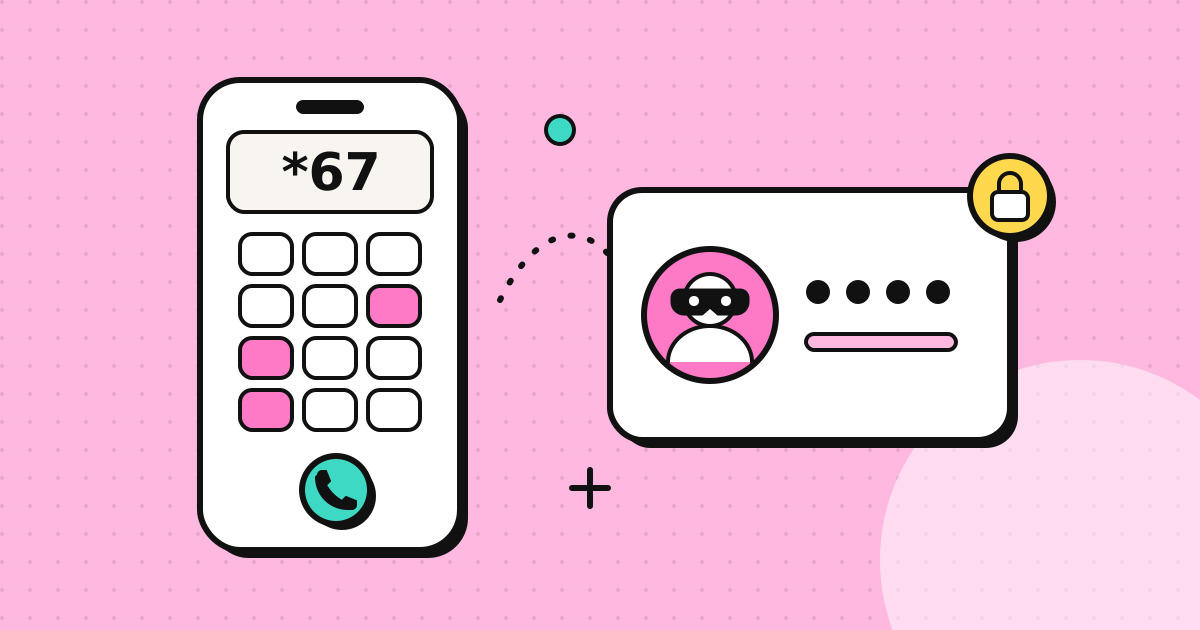
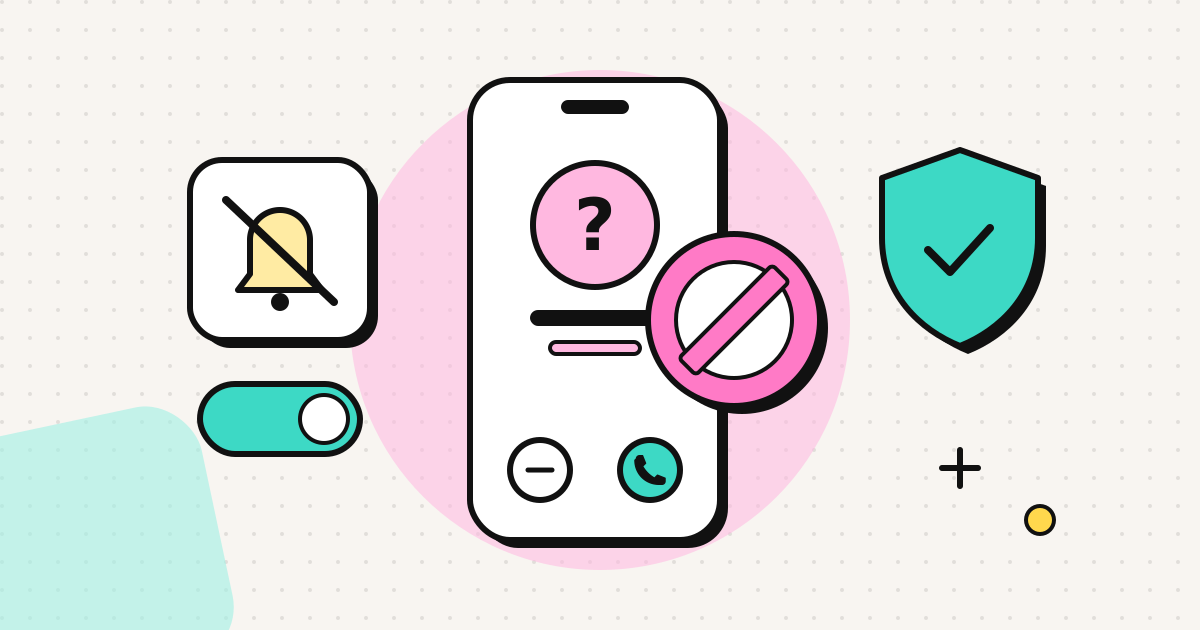
Yes, *67 still works in 2026 for calls inside the US and Canada. Dial *67 before the number and the call shows as "No Caller ID" or "Private". It doesn't hide you from toll-free numbers or emergency services, it doesn't work outside North America, and more and more phones now silence hidden callers automatically. This article explains what *67 actually does, how to test what your own caller ID shows, and how scammers fake caller ID, using the fake "PCH" prize call as the main example.
What *67 does
*67 is a North American vertical service code for "calling number delivery blocking". When you dial it:
- Your carrier still sends your number with the call.
- It also sets a privacy flag ("presentation restricted").
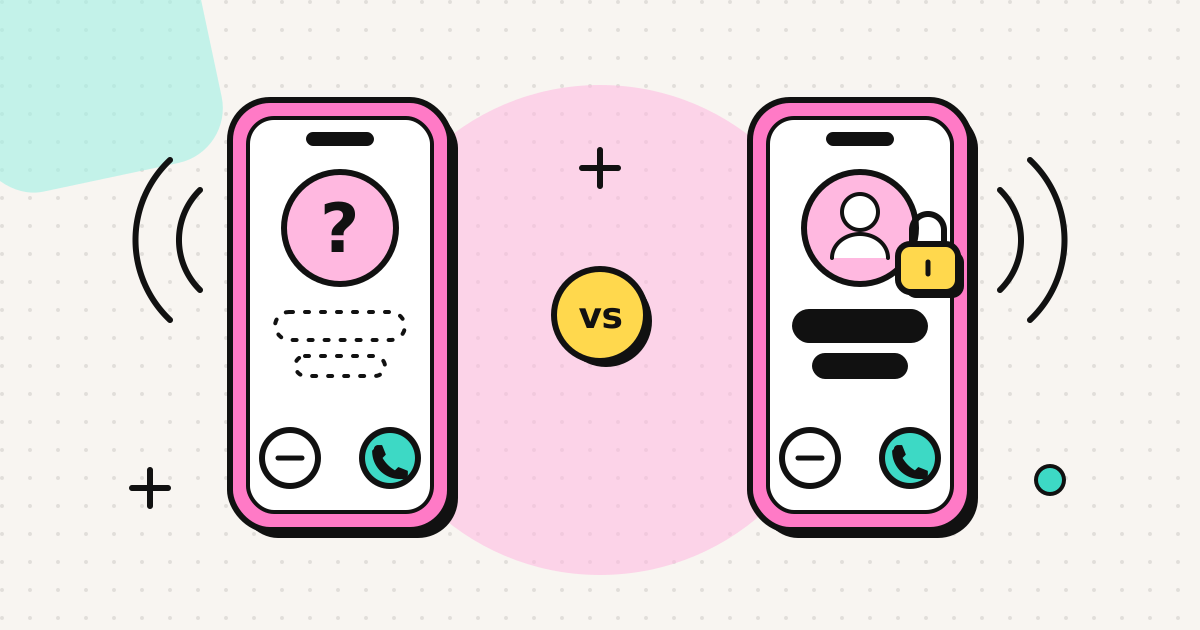
- The receiving carrier respects the flag and shows "No Caller ID", "Private" or "Blocked" instead of your number.
Your number isn't erased. It's hidden from the display, and the network still has it. That's why it gets through to billing systems (toll-free numbers), emergency services, and law enforcement through carrier records.
Related codes
| Code | What it does |
|---|---|
*67 |
Hide your number for this call |
*82 |
Show your number for this call (if blocked by default) |
*69 |
Call back the last caller (won't work on hidden numbers) |
*57 |
Call Trace, results go to law enforcement |
*77 / *87 |
Turn Anonymous Call Rejection on / off (landlines) |
Outside North America
*67 is part of the North American Numbering Plan. Elsewhere you'd use 141 in the UK, or #31# on most mobile networks in Europe and Australia. The full table is in how to call with No Caller ID.
Why *67 works less well than it used to
The code itself works. What has changed is how phones treat hidden calls:
- iPhone (iOS 26) can screen unknown callers before ringing, or silence them.
- Android can block hidden numbers completely.
- Many US landlines have Anonymous Call Rejection (
*77), which plays a message asking the caller to unhide.
So a *67 call increasingly goes to voicemail or doesn't ring at all. Details in how to block No Caller ID calls.
How to test your own caller ID
Before important calls, especially from a new service, check what the other person will see:
- Call a friend or a second phone of your own. Note the number and name shown.
- Test with and without
*67. - Test each way you call. Mobile signal, Wi-Fi calling, your desk phone, and any app or browser service can each present your number differently.
- Test across borders if you call abroad. A number that shows correctly at home can arrive as "Unknown" or with a different number in another country, because carriers along the route can drop or change it. The Unknown vs No Caller ID explainer covers why.
Businesses with phone systems also check that their caller ID name (CNAM) is set up, because in the US the name shown is looked up in carrier databases rather than sent with the call.
Spoofing: when caller ID lies
Caller ID was designed when only phone companies could set it. Internet telephony made it possible for almost anyone to put any number, or in the US any name, on a call. That's spoofing.
The fake "PCH" call
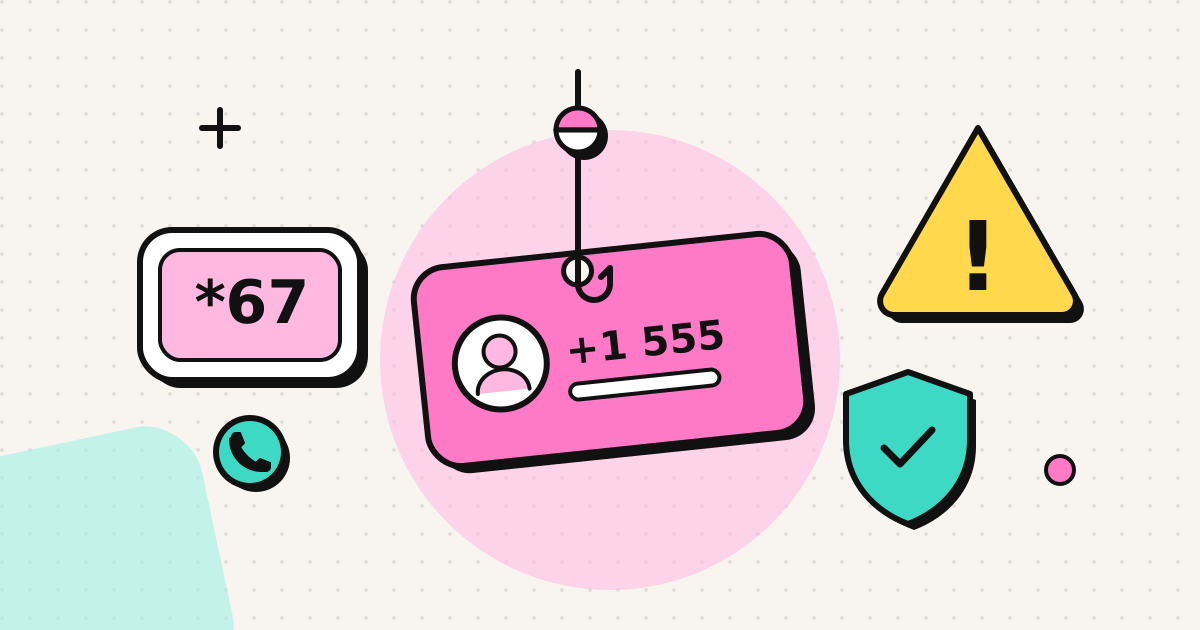
A well-known example in the US: your phone shows "PCH" or "Publishers Clearing House", and the caller says you've won a large prize. To release it, you just need to pay a "processing fee" or "taxes", often by gift card or wire transfer.
It's a scam. Some background:
- Real sweepstakes don't charge winners to collect, and PCH has long said it never asks for payment to claim a prize.
- Publishers Clearing House filed for Chapter 11 bankruptcy in April 2025 and sold its assets. Better Business Bureaus were still warning about fake PCH calls later that year.
- The caller ID name proves nothing. It can be typed in by whoever placed the call.
Rule: if a caller asks you to pay to receive money, hang up. If you want to check, call the organisation back on a number from its official website, not the number the caller gives you.
What's being done about it
- The law (US): the Truth in Caller ID Act makes spoofing illegal when it's done to defraud, cause harm or wrongfully obtain anything of value.
- STIR/SHAKEN: US carriers digitally sign calls on IP networks to show whether the caller is entitled to the number. In 2025 the FCC proposed extending authentication to older non-IP networks.
- The UK: Ofcom has tightened rules on calls from abroad that present UK numbers, including withholding UK mobile numbers on calls from abroad unless they can be verified.
Showing your real number, legitimately
Presenting a number you're authorised to use, such as your own mobile or your business line, isn't spoofing. It's how normal calls work, and anti-spoofing rules are designed to separate the two.
EzyRing works this way for international calls from a browser. Before your number can be used, you prove you own it: we call the number and you type in the code shown on screen. After that, calls go out with it as caller ID. You can't use a number you haven't verified, and EzyRing doesn't make anonymous calls. How the number displays is decided by the recipient's carrier, and the anti-spoofing rules above are one reason a number from the recipient's own country can be withheld when it arrives from abroad. The verified caller ID page has the details, and the rates page shows per-minute prices by country.
Frequently asked questions
Does *67 still work in 2026?
Yes, on most US and Canadian landlines and mobiles. Dial *67 then the full number and the call arrives as No Caller ID or Private. It does not hide your number from toll-free numbers or emergency services, and it doesn't work from outside North America.
How can I test what my caller ID shows?
Call a friend's phone or your own second phone and look at what appears. Test both with and without *67, from Wi-Fi calling and normal mobile signal, and from any app or service that calls on your behalf, because each can present your number differently.
Is a call showing 'PCH' a scam?
Treat it as one. Caller ID names can be faked, and fake Publishers Clearing House calls ask winners to pay a fee or buy gift cards first. Publishers Clearing House says it never asks for payment to claim a prize, and the company itself went through Chapter 11 bankruptcy in 2025.
Is caller ID spoofing illegal?
In the US, the Truth in Caller ID Act makes it illegal to send misleading caller ID with intent to defraud, cause harm or wrongfully obtain anything of value. Presenting a number you are authorised to use, such as your business line, is legal.
Written by
EzyRing Team
The team that builds EzyRing, a browser phone for calling landlines and mobiles abroad, made in Madrid.
Ready to make the call?
Sign-up is free. You only pay for the minutes you use.
Prepaid, no subscription
Top up from $5. Credit doesn't expire, and nothing renews.
Rate shown before you call
You see the per-minute price before dialling and the running cost during the call.
Caller ID from a number you verify
Verify a number you own once; calls go out with it. Display depends on the recipient's carrier.
Calls aren't recorded. EzyRing is not for emergency calls.