Will They See My Number? Caller ID on International Calls
Caller ID travels through several carriers on an international call, and any of them can drop or replace it. How it works, the common exceptions, and how to test it before a call that matters.
On this page (6 sections)
On most international calls, the person you're calling sees the number you called from, but it isn't guaranteed. Caller ID passes through several carriers between your country and theirs, and any one of them can drop it, replace it or withhold it. The most common exception is a number from the same country you're calling: many countries now block or hide a "local" number that arrives on an international line, because that is exactly what phone scammers do.
This article explains how caller ID travels, why it sometimes arrives as "Unknown" or as a number you've never seen, which country rules matter in 2026, and how to check what your contacts will see before a call that matters.
How caller ID travels on an international call
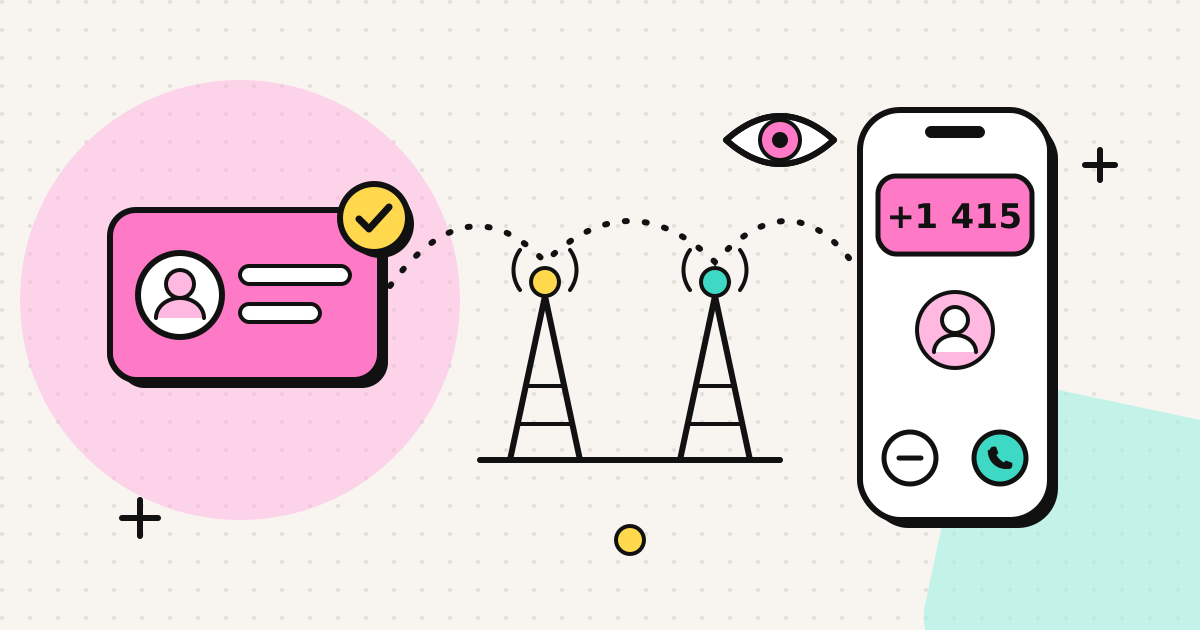
When you place a call, your phone or calling service attaches your number to it. On modern networks this happens in the call signalling, the set of messages that sets the call up before any audio flows. From there:
- Your provider hands the call, with your number attached, to a carrier that sells international routes.
- One or more transit carriers carry it across borders. A single call can pass through more than one.
- The destination carrier (the recipient's mobile or landline company) receives it and delivers it to their phone, deciding what to show on the screen.
The number survives this journey on most well-run routes. But each hand-off is a point where it can be stripped or altered, and the destination carrier always has the final say.
Why your number sometimes arrives as "Unknown" or a strange number
The route didn't carry it
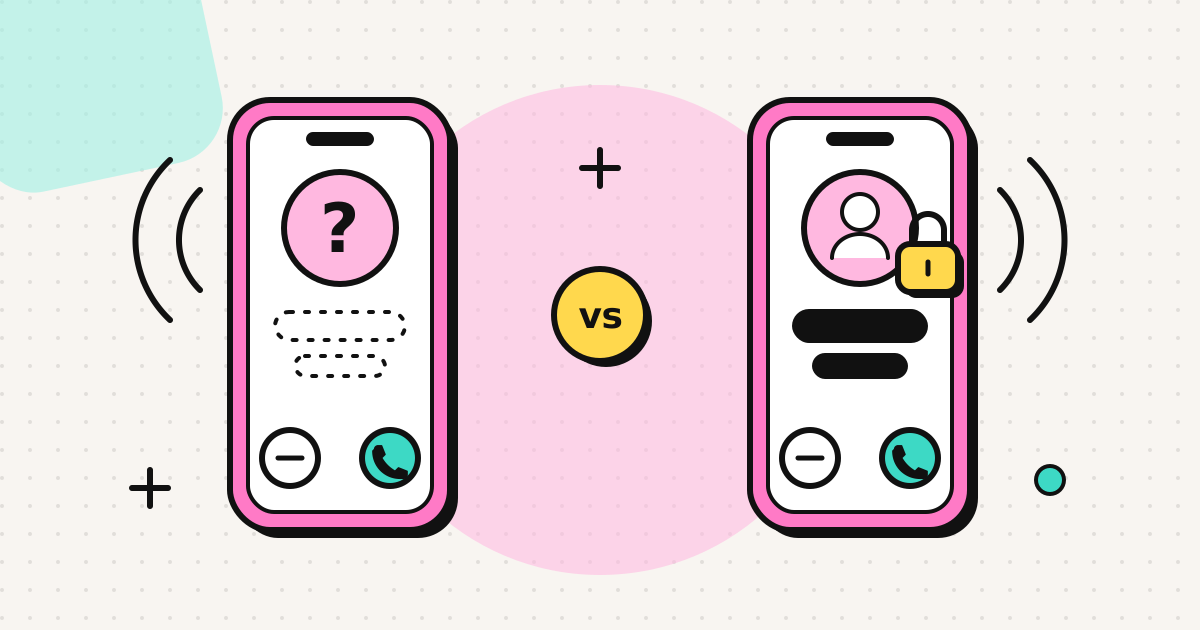
International calling is a wholesale market, and some cheaper routes don't pass caller ID reliably. The call connects, but the number is missing, so the phone shows "Unknown", "No caller ID" or "Private". This is one reason some calling apps display inconsistently from one day to the next.
The service replaced it with its own number
Many calling apps don't send your number at all. They send one from their own pool, which might be in a different country from you. The recipient sees an unfamiliar foreign number, doesn't answer, and if they call back they reach the app's line, not you. We cover the difference between these displays in unknown caller vs no caller ID.
The destination country withheld it
Regulators have spent the last few years tightening the rules on numbers arriving from abroad. Their target is spoofing: scammers abroad faking local numbers so the call looks like it's from a bank, a government office or a family member. The side effect is that genuine calls showing a local number from abroad can be hidden or blocked too.
The destination carrier labelled it
In the US, carriers sign calls under the STIR/SHAKEN framework to show how confident they are that the caller is entitled to the number. Calls that arrive from abroad typically get the lowest level, gateway attestation, because the receiving carrier can see where the call entered its network but can't verify the original caller. Depending on the recipient's carrier and apps, that can influence spam labels.
Same-country numbers arriving from abroad: the common exception
This is the case that surprises people most. You're living in Spain, you call your mum in London, and you'd like her to see your old UK mobile number. Or you're in the US and want to call India showing your Indian number. In several important countries, that's exactly the pattern anti-spoofing systems are built to stop.
| Country | What happens to a local number arriving from abroad |
|---|---|
| United Kingdom | Providers are expected to block calls from abroad that show a UK landline number. Ofcom's July 2026 statement tells providers to withhold UK mobile numbers on international calls unless the number can be verified, closing the old exemption for roaming phones (background). |
| India | Since October 2024 the International Incoming Spoofed Calls Prevention System blocks international calls displaying Indian +91 numbers. |
| Pakistan | The PTA has spent years fighting grey traffic: international calls slipped onto the local network disguised with local numbers. A +92 number on a call from abroad fits that pattern, so don't count on it displaying. |
The practical rule: show a number from a different country from the one you're calling. A US number calling India, a Spanish number calling the UK, a UK number calling Pakistan. Cross-border caller ID like this usually displays normally, and it's the number your family or clients are most likely to have saved anyway if that's where you live now.
What "verified caller ID" means
Spoofing is showing a number you don't have the right to use. The opposite is showing a number you own and have proved you control, which is how caller ID is supposed to work. In the US, the Truth in Caller ID Act prohibits sending misleading or inaccurate caller ID with intent to defraud, cause harm or wrongly obtain anything of value; displaying your own number is not that.
A calling service that offers verified caller ID checks ownership before it lets you use a number. With EzyRing, verification works like this:
- You enter the number you want to show (your mobile, for example).
- The service calls that number.
- You answer and key in the code shown on your screen.
- From then on, calls from the browser can go out with that number as caller ID. You can verify more than one number and choose which to use for each call.
Verification proves to the service that the number is yours. It does not override the destination carrier. So the honest promise is: your own number is sent with the call, cross-border calls usually display it, and how it appears in the end depends on the recipient's carrier. Anyone who promises it will always show, everywhere, is overselling. The verified caller ID page lists the same limits.
One practical benefit people overlook: when the recipient calls back, they call your real number, so the callback reaches your own phone rather than an app's pool number.
How to test it with a friend before an important call
Don't find out during a job interview or a call to your bank. Test first:
- Pick someone in the same country, and ideally on the same carrier, as the person you'll call.
- Call them from the same service and the same caller ID you plan to use.
- Ask exactly what they see: your number, your saved contact name, "Unknown", "International call", or a different number.
- Ask them to call back the number they see, to confirm it reaches you.
- If it doesn't display, try showing a number from a different country, or tell the person by message beforehand that you'll call at a set time.
If you're calling someone who may not answer unknown numbers at all, a short message beforehand ("calling you in 5 minutes from my UK mobile") often matters more than any technical setting. And if you want to understand the opposite case, deliberately hiding your number, see how to call with no caller ID.
The short answer
Most international calls show your number. The exceptions are routes that strip it, apps that replace it, and countries that hide local numbers arriving from abroad. Show a number you own, from a different country from the one you're calling, and test it once. If you'd like to try it from a browser, you can create an account, verify your number and make a short test call; how it works shows each step first.
Frequently asked questions
Does caller ID work on international calls?
Usually, yes. Your number is passed along with the call from carrier to carrier. But any carrier on the route, or the recipient's carrier, can drop it, replace it or withhold it, so it is never guaranteed. Calls between two different countries normally display it best.
Why does my international call show as 'Unknown' or a random number?
Common reasons: a carrier on a low-cost route didn't pass the number on, the calling app sends its own pool of numbers instead of yours, or the destination carrier withheld it under anti-spoofing rules. The last case is most common when the number you show belongs to the same country you are calling.
Can I show my UK number when calling the UK from abroad?
It is getting harder. UK providers are expected to block calls from abroad that display a UK landline number, and Ofcom's July 2026 statement tells providers to withhold UK mobile numbers on international calls unless they can be verified. Calls from a UK number to other countries are not affected by these UK rules.
Is it legal to show my own number when calling through an internet service?
Showing a number you genuinely own and control is the normal, legitimate use of caller ID. What regulators target is spoofing, where someone displays a number they don't have the right to use. In the US, the Truth in Caller ID Act prohibits misleading caller ID used with intent to defraud, cause harm or wrongly obtain anything of value.
What does 'verified caller ID' mean?
It means the calling service has checked that you control the number before letting you use it as caller ID, typically by calling or texting it with a code you have to enter. It proves ownership to the service; it does not force every carrier in the world to display the number.
Written by
EzyRing Team
The team that builds EzyRing, a browser phone for calling landlines and mobiles abroad, made in Madrid.
Ready to make the call?
Sign-up is free. You only pay for the minutes you use.
Prepaid, no subscription
Top up from $5. Credit doesn't expire, and nothing renews.
Rate shown before you call
You see the per-minute price before dialling and the running cost during the call.
Caller ID from a number you verify
Verify a number you own once; calls go out with it. Display depends on the recipient's carrier.
Calls aren't recorded. EzyRing is not for emergency calls.