How to Call Your Bank From Abroad Without Roaming
A blocked card abroad usually means calling your bank. How to find the right number (not the toll-free one), what to have ready, avoiding roaming on a long hold, and what banks never ask.
On this page (7 sections)
- Before you call: find the from-abroad number
- Why calling from your registered number can help
- Your options for making the call
- Calling from a browser with your own number as caller ID
- Getting through phone menus and hold queues cheaply
- Security: what your bank will and won't ask
- A five-minute checklist before your next trip
To call your bank from abroad, don't dial the toll-free number you use at home. Use the overseas number printed on the back of your card or on the bank's "calling from abroad" contact page, and place the call over Wi-Fi rather than on a roaming network, because bank calls involve hold queues and roaming is billed by the minute. Have your card, ID details and a second way to receive security codes ready before you dial.
That covers the urgent part. Below is how to find the right number, why the number you call from matters (and when it doesn't), how to get through menus and holds cheaply, and how to tell your real bank from a scammer.
Before you call: find the from-abroad number
Your bank almost certainly has two kinds of phone numbers:
- Domestic toll-free numbers (800, 888 or similar in the US; 0800 or 0808 in the UK). These are free from home but often can't be dialled from another country at all, or connect at international rates.
- Overseas or international numbers, which are ordinary geographic numbers anyone can dial. These are the ones you want.
Where to find the overseas number:
- The back of your card. Many banks print a second number labelled "outside the US", "from abroad" or "call collect".
- The bank's website, usually under Contact us, Lost or stolen cards, or Travelling abroad.
- The banking app, which often has a "call us" button that shows the correct number for your situation.
As an example, Bank of America lists separate international numbers for credit card and debit card problems, and notes that collect calls must go through the local country's operator, otherwise you may pay international charges. Collect calls through an operator are still possible in some places but have become harder to arrange from hotel rooms and mobile phones, so plan on paying for the call yourself.
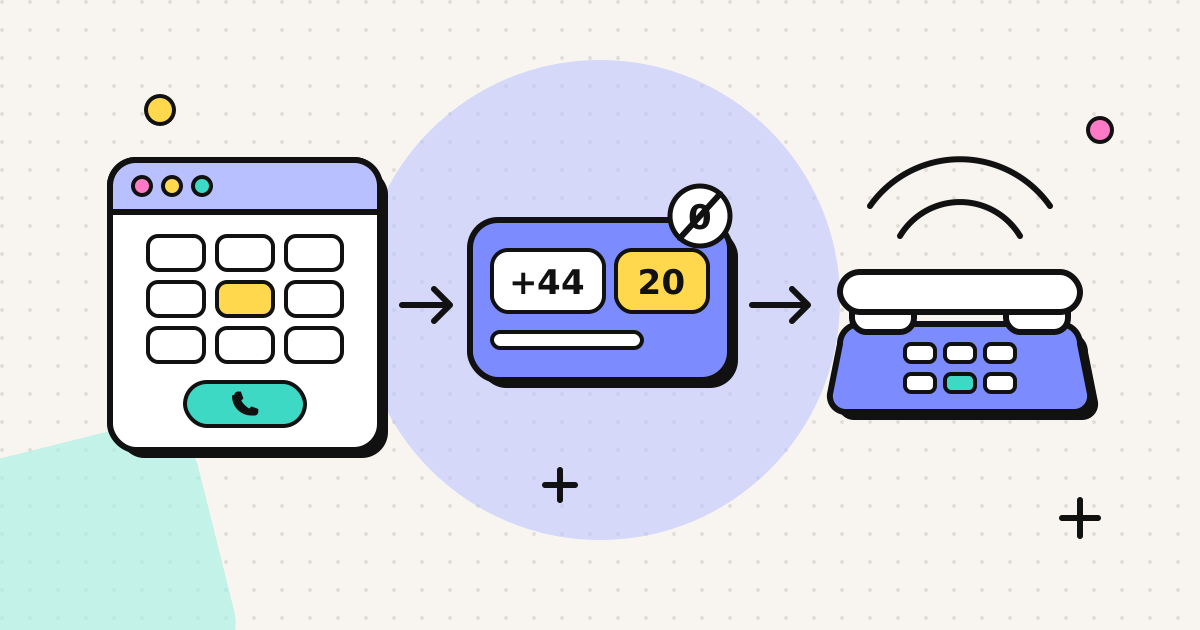
Save the number now, before you travel, in international format (+1 …, +44 …). If your card is stolen, you won't be able to read the back of it.
What to have ready
- Card number, or at least the last four digits (note them in your password manager before you travel; a photo of the back of a card in your camera roll is a gift to a phone thief)
- Your date of birth, postcode or ZIP, and any telephone banking passcode
- The phone that receives your bank's SMS codes, switched on, or the banking app logged in on another device
- Details of the transaction or alert you're calling about: amount, merchant, time
- A quiet place and enough battery or Wi-Fi for a 30-minute call
Why calling from your registered number can help
Banks identify you by what you know (security questions, passcodes), what you have (your card, your phone, your app), or both. The number you call from is not enough on its own, and any decent bank knows caller ID can be faked.
Still, calling from the number on your account has practical advantages. Some phone systems use it as one signal to pull up your profile faster, and you avoid the awkward moment where the agent asks why you're calling from an unfamiliar number while your card is blocked for suspicious activity. It also means a callback reaches you.
There is one important catch. When you're abroad and call a bank in your home country showing a home-country number, the call arrives from an international route but displays a domestic number. Regulators treat that pattern carefully because scammers use it:
- UK providers are expected to block calls from abroad that display a UK landline number, and Ofcom's July 2026 statement extends protection to UK mobile numbers, with providers to withhold UK mobile caller ID on international calls unless it can be verified (background).
- India has blocked international calls that display an Indian +91 number since October 2024, and carriers in other countries filter the same pattern with their own anti-spoofing systems.
So for bank calls, think of your caller ID as a helpful extra, not something to depend on. The bank will verify you properly either way.
Your options for making the call
| Option | Cost on a long hold | Shows your registered number | Notes |
|---|---|---|---|
| Mobile roaming, pay-per-use | Highest | Usually yes | Per-minute roaming rates plus possible charges for incoming calls if the bank calls back. |
| Roaming day pass | Fixed daily fee | Usually yes | Fine if you already bought one for the trip. |
| Wi-Fi calling on your own phone | Often low or nothing to home-country numbers | Usually yes | Depends on your carrier: AT&T, for example, doesn't charge Wi-Fi calls to US numbers from abroad, but bills calls to other countries at international rates. Check your plan. |
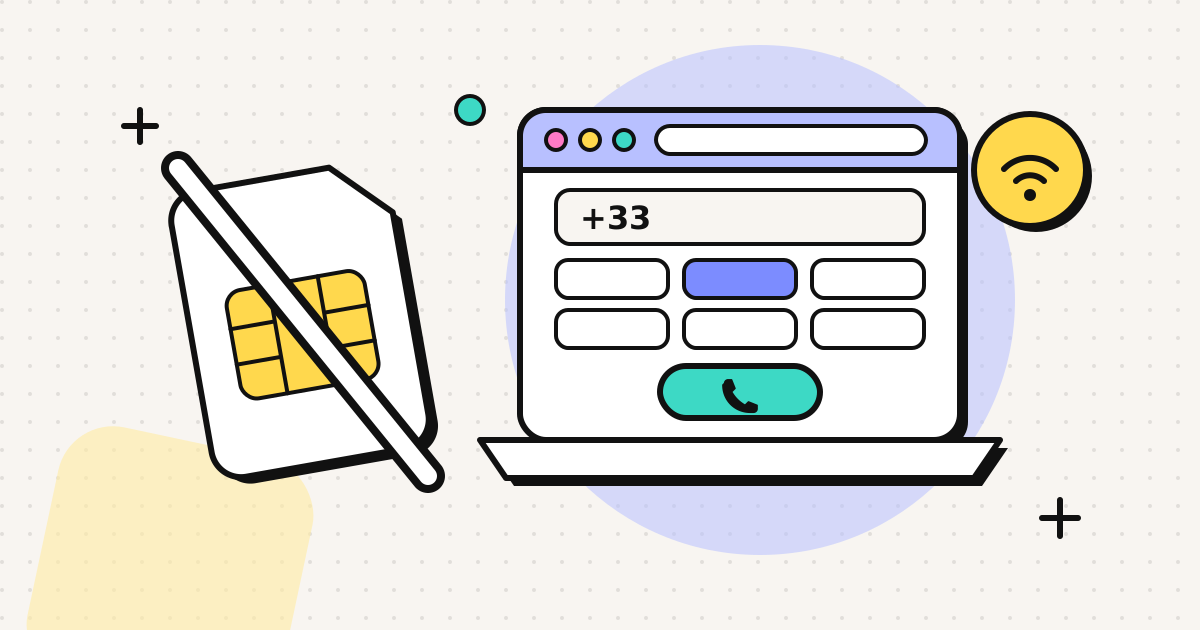
| Local SIM or eSIM with a number | Local rates to an international number | No, shows the local number | You'll need to explain the unfamiliar number. |
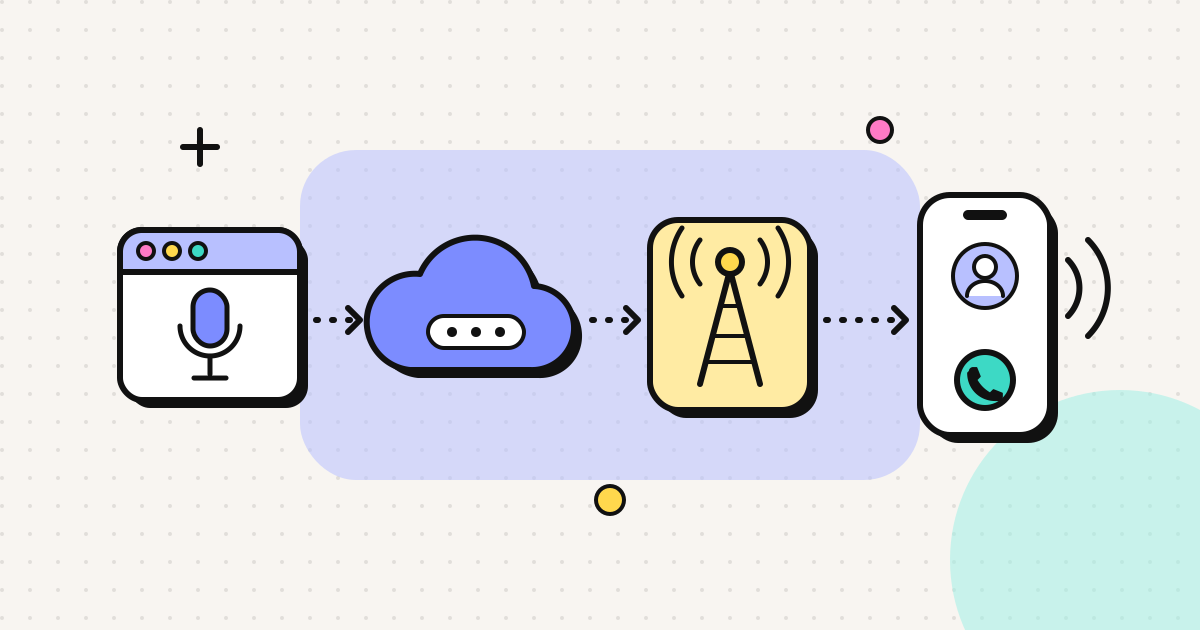
| Internet call from a laptop or phone browser | Per-minute rate you see before dialling | Possible with verified caller ID | Works on any Wi-Fi. |
If your carrier offers free Wi-Fi calling to home-country numbers and your bank's overseas number is a home-country number, that's often the cheapest route. When it isn't (your bank is in a third country, Wi-Fi calling is blocked on the hotel network, or your phone was the thing that got stolen), an internet call from a laptop is a good fallback.
Calling from a browser with your own number as caller ID
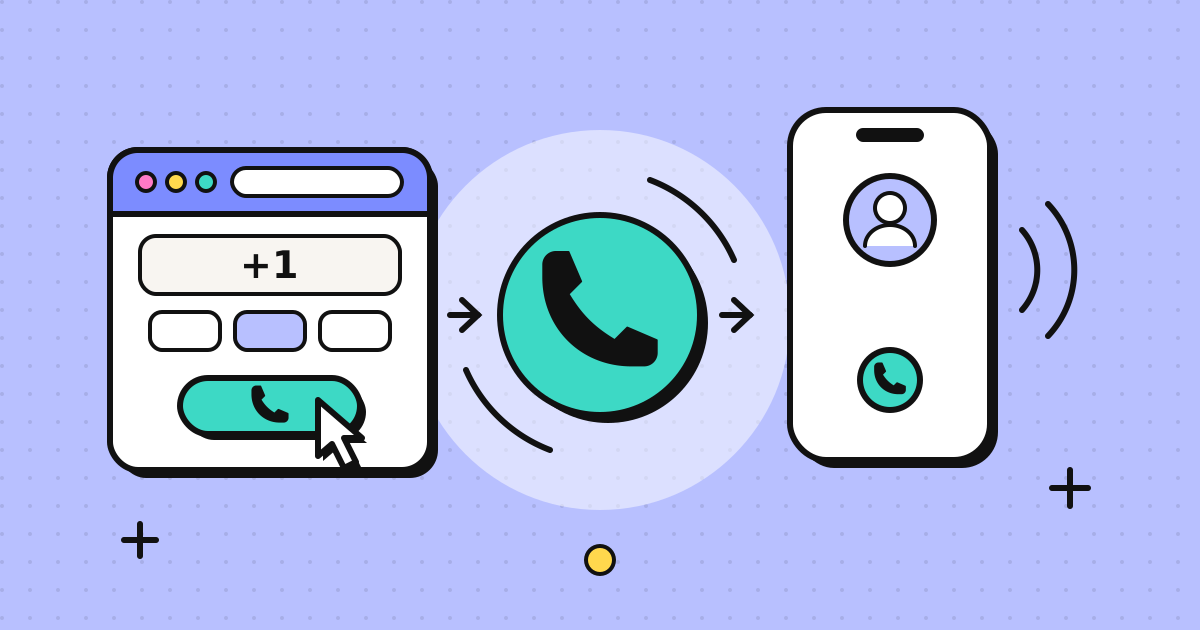
With EzyRing, you open the dialer in any browser on a laptop or phone, type the bank's overseas number in + format and call over Wi-Fi. The per-minute rate appears before you dial, so you know what a 20-minute hold will cost before it starts.
If you've verified your registered number (the service calls it once and you key in a code), calls can go out showing it. As explained above, a same-country number arriving from abroad is the case where display is least predictable, so treat it as a bonus. The use cases page has other examples of calls that work this way.
Two limits to be clear about: it doesn't receive calls, so if the bank needs to call you back it will ring your normal phone; and it is not for emergency calls.
Getting through phone menus and hold queues cheaply
Bank calls are rarely short. A few habits keep the cost and stress down:
- Check hours and wait times first. Work out the time in the bank's home country and check the opening hours of the card or fraud team; some lines are 24/7, others are not. If the bank's app or website shows current waiting times, use them to pick your moment.
- Pick the right menu option first time. Fraud and lost-card options are often answered faster than general enquiries. With a browser phone, use the in-call keypad to press menu numbers and type your card number when asked.
- Ask for a callback if offered, but only if you can receive calls cheaply where you are.
- Watch the meter. If you can see the running cost during the call, you can decide calmly whether to keep holding. On prepaid credit, the call ends before your balance runs out rather than running up a bill.
- Write down the reference number the agent gives you. If the call drops, it saves you starting again.
If your bank has a secure chat in its app, that can be a useful parallel channel while you wait on hold. For blocked cards, many banks also let you unfreeze the card or confirm a transaction in the app without speaking to anyone.
Security: what your bank will and won't ask
Travel is when people are most exposed to bank impersonation scams: you're stressed, your card may be blocked, and a call that seems to come from your bank feels like help.
The UK's Take Five to Stop Fraud campaign sums up the rules, and they apply to banks in most countries:
- A genuine bank will never ask for your card PIN or your full online banking password, spoken or tapped into the keypad. (Some telephone banking menus ask for selected digits of a separate phone passcode; that is different from your PIN.)
- It will never ask you to move money to a "safe account".
- Caller ID can be faked. If someone calls you claiming to be your bank, hang up and call back on the number from your card or the official website. Don't use a number given to you in the call, a text or an email.
A useful rule while abroad: you call the bank; the bank doesn't get to call you and take control of the conversation.
A five-minute checklist before your next trip
- Save your bank's overseas numbers (cards and general enquiries) in your contacts in
+format. - Note the last four digits of each card and which bank and network it belongs to, somewhere you can reach if your phone is stolen.
- Check how your carrier bills Wi-Fi calls from abroad.
- Make sure your banking app works and you can approve payments in it.
- Set up a fallback way to call from a laptop. With prepaid credit you can create an account and add $5 now, and the credit doesn't expire, so it's there if you need it on a trip months from now. You can see the rates by country and how it works before you sign up.
If the number you need is a US toll-free line, see our guide to calling a US toll-free number from abroad.
Frequently asked questions
Can I call my bank's toll-free number from abroad?
Often not. Toll-free numbers such as US 800 numbers or UK 0800 numbers are designed for domestic callers, and many can't be reached from other countries or are charged at international rates if they can. Use the overseas number printed on your card or listed on your bank's website.
Do I need to call from my registered phone number?
It isn't required, but it can help. Your bank will still verify you with security questions, a code or its app. If you can, show your registered number as caller ID so the call matches your profile, and keep that phone with you in case the bank sends a one-time code by SMS.
How do I avoid roaming charges when calling my bank?
Avoid placing the call over the foreign mobile network on a pay-per-use roaming tariff. Use Wi-Fi calling if your carrier bills calls to home-country numbers as domestic, or an internet call over Wi-Fi from a laptop or phone. Bank calls often involve long holds, so per-minute roaming charges add up quickly.
Will my bank's caller ID check work when I call from abroad?
Don't rely on it. When you call from abroad using a number from the same country as the bank, some countries withhold or block that caller ID. Banks identify you by security questions or app approval, so be ready for those either way.
What should I do if someone calls me claiming to be my bank?
Hang up and call the bank back on the number printed on your card or on its official website. Caller ID can be faked, and genuine banks don't ask for your full PIN or online banking password, or ask you to move money to a 'safe account'.
Written by
EzyRing Team
The team that builds EzyRing, a browser phone for calling landlines and mobiles abroad, made in Madrid.
Ready to make the call?
Sign-up is free. You only pay for the minutes you use.
Prepaid, no subscription
Top up from $5. Credit doesn't expire, and nothing renews.
Rate shown before you call
You see the per-minute price before dialling and the running cost during the call.
Caller ID from a number you verify
Verify a number you own once; calls go out with it. Display depends on the recipient's carrier.
Calls aren't recorded. EzyRing is not for emergency calls.