Virtual Phone Numbers for Small Businesses Selling Abroad
How a local number in another country works, what it costs, the paperwork some countries require, and how to make outbound calls to customers from the same number.
On this page (7 sections)
A virtual phone number is a real phone number in another country that rings wherever you choose, usually your mobile, a softphone app or a support team, instead of a phone line in that country. For a small business selling abroad, it lets customers call a local number at local rates, and it lets you call them back from a number they recognise. This guide covers how the numbers work, what they cost, the paperwork some countries require, and how to handle outbound calls.
Why customers care about a local number
Customers hesitate to call an unfamiliar foreign number. They aren't sure what the call will cost, they worry about being kept on hold internationally, and the business feels far away. Regulators also report that people are much more likely to answer calls from domestic-looking numbers than international ones. In February 2025, Ofcom found UK users were far more willing to pick up an unknown UK mobile number than an international one, which is also why scammers try to fake local numbers (Ofcom consultation).
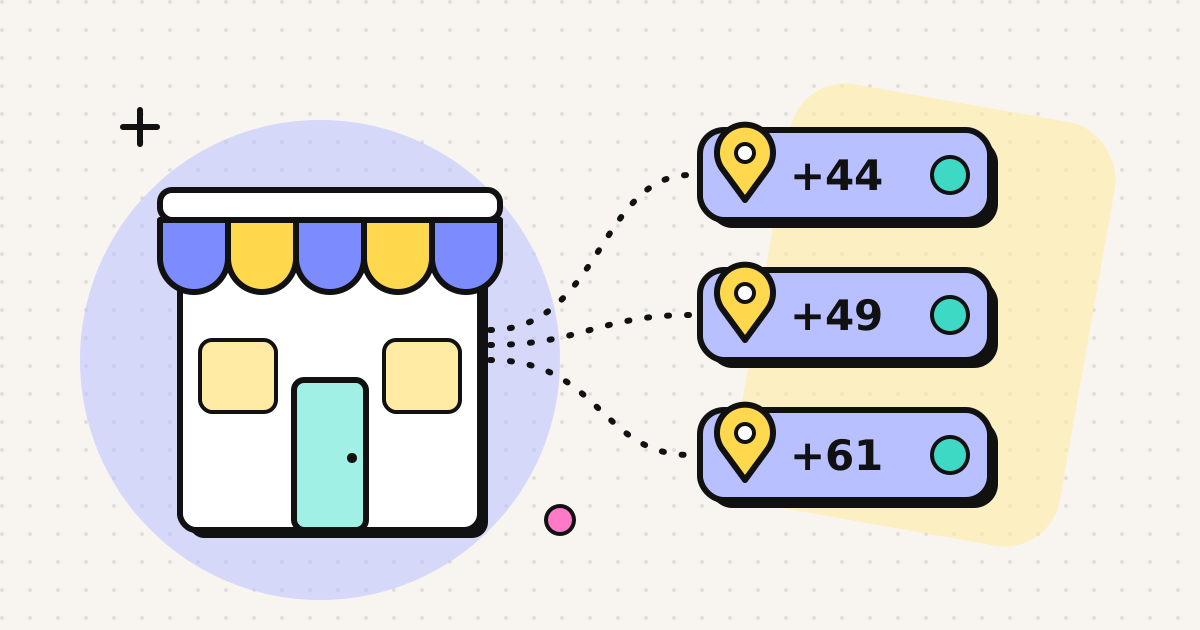
A local number fixes the inbound side of this. Customers in Manchester dial a +44 number, and customers in Sydney dial a +61 number.
How a virtual number works
- You rent a number from a provider (a cloud phone company or a carrier).
- A customer dials it as they would any local number.
- The provider routes the call over the internet to wherever you've set it up:
- your mobile, in any country
- a softphone or app on your laptop
- a group of agents in turn or all at once
- an IVR menu ("press 1 for orders")
- voicemail, with recordings emailed to you
- You change the routing in a dashboard whenever you like, for example to follow office hours across time zones.
Types of number
| Type | Example | Good for | Watch out for |
|---|---|---|---|
| Local / geographic | +44 20 (London), +1 212 (New York) | Looking local, cheapest for callers | Address requirements in many countries |
| National / non-geographic | +44 3xx (UK) | Nationwide presence | Not every country has an equivalent |
| Mobile | +44 7xxx, +34 6xx | SMS and WhatsApp Business | Stricter ID rules, not available everywhere |
| Toll-free | 0800, 1-800 | Free for domestic callers | Often unreachable from abroad; costs you per minute |
Paperwork
Provider sales pages tend to skip this. Many countries regulate who can hold a local number:
- Proof of address in the country or the number's area is common for geographic numbers, especially across much of Europe.
- Business registration or ID documents may be needed, particularly for mobile numbers.
- Some number types aren't available to foreign entities at all.
Allow days, not minutes, for approval in strict countries, and keep your documents up to date, because numbers can be withdrawn if you don't.
Costs
The number itself is usually a monthly rental. It's often cheap for local numbers in large markets and more expensive for toll-free numbers and some countries. On top of that you pay for usage: inbound minutes (especially for toll-free numbers and forwarding to mobiles) and outbound calls. Compare providers on:
- the monthly rental per number
- the per-minute cost of inbound and forwarding
- the outbound rates for your markets
- setup fees and minimum contract terms
Outbound calls: the half most businesses forget
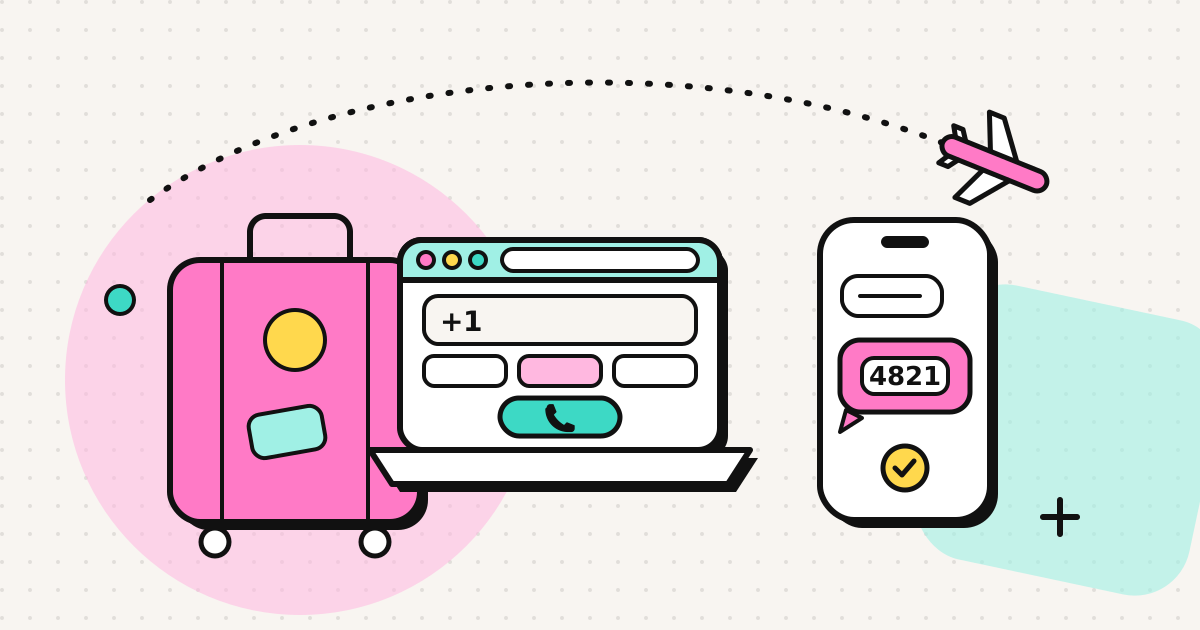
Inbound calls are only half of it. When you follow up on a quote, chase an invoice or return a voicemail, the customer should see the same number they called. If they see a random foreign number, they often don't answer.
EzyRing handles this side. It's a browser dialer for outbound calls to landlines and mobiles abroad. It doesn't provide numbers or receive calls, so it's used alongside your virtual number provider:
- Verify the virtual number once. We place a short call to it, and you answer (on the phone or app it forwards to) and key in the code.
- After that, calls from your browser go out with that number as the caller ID, so customers see the number they already called.
- The dialer shows the per-minute rate before each call and the running cost during it. It's prepaid, with no subscription, and credit doesn't expire.
The caveat is that the recipient's carrier decides how caller ID is displayed. Cross-border calls usually show your number. Some countries withhold or replace a number from their own country when the call is placed from abroad, and the UK is moving this way for UK mobile numbers. The verified caller ID page keeps track of known cases.
A starter setup for a small team
- Pick your top one or two markets by revenue or support volume.
- Rent a local geographic number in each, and check the paperwork first.
- Route inbound calls to whoever is working at that hour, with voicemail to email after hours.
- Put the number on your website, invoices and email signatures for that market.
- Make outbound calls from the same number by verifying it as your caller ID.
- Review after three months: look at call volume per country, answer rates on outbound calls and cost per call.
For more on cutting the cost of outbound calls, read how to save on international business calls. The small business use case shows how other teams set this up.
Frequently asked questions
What is a virtual phone number?
A phone number that isn't tied to a SIM card or a physical line. Calls to it are routed over the internet to wherever you choose: your mobile, a softphone app, a team of agents or a voicemail box that emails you recordings.
Can I get a local number in any country?
Not freely. Many countries require proof of a local address, a registered business or ID for geographic or mobile numbers, and some don't allow foreign businesses to hold certain number types at all. Check the provider's requirements for each country before promising customers a local number.
Can customers abroad call my toll-free number?
Often not. Toll-free numbers like 0800 or 1-800 usually work only from inside their own country. If you sell internationally, a local geographic number in each market is more reliable than one toll-free number.
Can I make outbound calls showing my virtual number?
With many providers, yes. On EzyRing you can verify any number you own and can answer, including a virtual number that forwards to your phone or app. Calls from the browser then go out with it as caller ID, subject to how the recipient's carrier displays it.
Written by
EzyRing Team
The team that builds EzyRing, a browser phone for calling landlines and mobiles abroad, made in Madrid.
Ready to make the call?
Sign-up is free. You only pay for the minutes you use.
Prepaid, no subscription
Top up from $5. Credit doesn't expire, and nothing renews.
Rate shown before you call
You see the per-minute price before dialling and the running cost during the call.
Caller ID from a number you verify
Verify a number you own once; calls go out with it. Display depends on the recipient's carrier.
Calls aren't recorded. EzyRing is not for emergency calls.